۱۳۸۸ مهر ۲۰, دوشنبه

Al-Nakba 60 years: Rare Pictures(2

Al-Nakba 60 years: Rare Pictures (1


Haganah 1948


بهنود شجاعی اعدام شد

رش تصویری: حضور فعالین اجتماعی و حقوق بشری در مقابل زندان اوین برای جلوگیری از اعدام بهنود شجاعی


19مهر.صدا گرفته بود، تنها گفت تمام شد، بهنود اعدام شد

عليرضا فيروزی
ديشب غوغايی بود، نه هيچ کس به فکر سياست بود، نه به فکر خود، تنها همه به واسطه احساس انسان دوستي، خواب را بر خود حرام کرده بودند و ساعاتی پس از نيمه شب را در مقابل زندان اوين انتظار می کشيدند که شايد بتوانند از اوليای دم يک نوجوان ديگر، رضايت بگيرند و شادی را به خانه ی آن نوجوان بازگردانند.
حدود ساعت 2 بامداد به زندان اوين رسيديم، در ابتدا حدود 50 نفر از مادران صلح، فعالين حقوق بشر، هنرمندان و ... حضور داشتند و هر لحظه بر تعداد آن ها افزوده می شد. بعد از چند دقيقه، آقای اوليايی فر، يکی از وکلای بهنود به آن جا رسيد، خانواده بهنود را معرفی کرد و همين طور، فردی که به نمايندگی از يونيسف در جمع حضور داشت.

همه اميدوار بودند، هيچ کس از غم صحبت نمی کرد، بی صبرانه منتظر بودند که اوليای دم بيايند و خبر بخشش آن ها، همه را مدهوش کند، آسمان بخندد و صبح را با خنده و جشن به خانه بازگردند.

بعد از ساعتي، آقای مصطفايي، ديگر وکيل پرونده هم رسيد، همين طور بر تعداد افزوده می شد، تا حدود ساعت 4 که بيش از 200 نفر از همه قشرهای مردم جلوی زندان حضور داشتند. حدود ساعت 4 بود يا زودتر که خانواده احسان (مقتول) به در زندان رسيدند، با اين که چندين بار تاکيد شده بود که هيچ کس هجوم نبرد، باز همه از شوق، يا اميد اين که اثر بگذارند حجوم بردند، به جلوی در کوچک زندان رسيديم، جايی که برای بسيار خبر خوش می آورد، ياد دوستانی افتادم که برای آزاديشان در زندان جمع شده بوديم و از آن در بيرون آمده بودند. هيجان وصف ناپذيری بود، همه اميد داشتند و ... .

پدر احسان لب به سخن گشود، گريه می کرد، گفت من هم پدر هستم، گوشه دلم کشته شده، همه تنها هم دردی می کردند، برادر احسان، عصبانی بود و فقط می گفت برادر کوچکم کشته شده، پدرم را رها کنيد، هر کسی سراغ مادر احسان را می گرفت، خواهر احسان مانع می شد و می گفت، مريض است، رهايش کنيد، همه تنها فرياد می زدند، ببخشش، هر لحظه در ميان شيون و ناراحتی سکوتی همه جا را فرا می گرفت که گوش فلک را کر می کرد. مادر سهراب اعرابی جلو رفت، گفت من يک ماه جلوی اين زندان معطل شدم، هر روز به من اميد دادند که فرزندم زنده است، تا در روز آخر فهميدم کشته شده، من هم داغ دارم، به حرمت خون های ريخته شده ببخش، اما نبخشيد!

در آخر پدر باز لب به سخن گشود، گفت می بخشم، بگذاريد بروم داخل، نمی توانم فکر کنم. پدر و مادر احسان به همراه آقای اوليايی فر و آقای مصطفايی به داخل زندان رفتند، لحظه ی غريبی بود، هر کسی کاری می کرد که اين لحظات مرگ بار سريع تر بگذرند، همه اميد داشتند و می گفتند پدر می بخشد، عده ای دست به دعا بردند و امن يجب می خواندند، عده ای زيارت عاشورا، عده ای سيگار دود می کردند و عده ديگری می گفتند چند روز ديگر صفر انگوتی اعدام می شود، مبادا فراموشش کنيم. راه های جديد برای گرفتن رضايت از اوليای دم به ذهن ها می رسيد، ساعت گذشت. در کنار کوهيار گودرزی و دکتر فيروزی ايستاده بودم، تنها به ذهنم رسيد که ببينم اذان صبح چه ساعتی است، که شايد بتوانيم انتظارمان را تخمين بزنيم تا چه ساعتی بايد صبر کنيم که خبر شادی بخش رهايی بهنود از ديوارهای زندان به گوشمان برسد، 192 را گرفتم و متوجه شدم اذان صبح گفته شده و تا طلوع آفتاب 1 ساعت زمان باقيست، ساعت 5 و پنج دقيقه صبح بود، چند دقيقه بعد شيونی بلند شد، تا آن لحظه هر چه تلفن همراه آقای اوليايی يا آقای مصطفايی را می گرفتيم جواب نمی دادند، شيون که بلند شد تلفن ها را دوباره به دست گرفتيم، من به آقای اوليايی زنگ زدم و کوهيار به آقای مصطفايي، خبر يکسان بود، صدای گرفته و بغض آلود که جرات گريه شدن ندارد، نمی دانم پای تلفن خداحافظی کردم يا نه، تنها يادم می آيد نمی دانستم چه کاری بايد انجام دهم، نمی دانستم به کجای اين شب تيره بايد بياويزم، تنها پای تلفن گفته شد، "تمام شد".

ديگر يادم می آيد که تنها صدای شيون می شنديديم، گريه بود، فرياد بود، نگاهم به دنبال پدر بهنود رفت، از اين سو به آن سو، پدر بهنود گريه نمی کرد، سرگشته بود، گم کرده ای داشت، يادم می آيد از اين سو به آن سو می دويد، آرام راه می رفت، شايد نمی خواست باور کند که امروز پسر جگر گوشه اش هم بايد به کنار مادر خود برود و آن جا آرام بگيرد. شايد نمی خواست باور کند که قرار است جسد بی جان او از زندان بيرون بيايد، شايد نمی خواست باور کند که ...

محمد مصطفايی و محمد اوليايی فر از در کوچک زندان بيرون آمدند، خبرشان همانی بود که بود، گريه نمی کردند و در نگاهشان پيدا بود که اگر تاب داشتند چنان فريادی می کشيدند که گوش فلک کر شود و آسمان به دست و پای آن ها بيافتد، بعد از چند دقيقه، انگار تازه باور کرده بودند، شروع کردند به گريه کردن، نمی دانم در آن لحظات، آن مادر و پدر که صندلی را از زير پای جوانی می کشيدند به چه فکر می کردند.

يک نفر از ميان جمعيت امان خواست که سخن بگويد، فرياد زد که بهنود اول راه است، بهنود را فراموش نکنيم، تا بتوانيم ديگران را نجات دهيم، صفر انگوتی در آستانه اعدام است، کاری کنيم که او اعدام نشود.

همه با هم آماده می شويم، صفر انگوتی ده روز ديگر پای چوبه دار می رد، نگذاريم او را اعدام کنند
منبع خبر : خبرگزاری هرانا

**************

تجمع خانواده های سهراب اعرابی و ندا آقاسلطان به همراه جمعی از فعالان حقوق بشر با درخواست لغو اعدام بهنود شجاعی در برابر زندان اوین

کمیته گزارشگران حقوق بشر - عقربه‌های ساعت برای جوانی که قرار است سپیده دم فردا را نبیند، به تندی حرکت می‌کنند و او درانتظار یک کلام، یک خبریا یک حکم است." توقف اجرای حکم اعدام". بخشش خانواده مقتول. این اولین بار نیست که بهنود شجاعی، تا پای چوبه دار می رود و در آخرین لحظه، حکم به بازگشت او به سلول صادر می شود. از سال 84 تا سال 88، 4 سال است که زندگی بهنود در کابوس سلول انفرادی، چوبه دار، طناب و آن لحظه ی آخر گذشته است. لحظه ای که دیگر جانی در بدن نیست.

امشب نیز،چنان شبی است. بهنود هم اکنون در سلول انفرادی، ساعت ها و ثانیه‌های باقیمانده را می‌شمارد و در دلش امید دارد که فردا بتواند خورشید را در آسمان زندان ببیند.

امشب ساعت 2 نیمه شب، جمعی از فعالان حقوق بشر، مخالفان مجازات اعدام و همچنین خانواده‌های سهراب اعرابی و ندا صالی آقا سلطان از جان باختگان حوادث پس از انتخابات، در برابر زندان اوین جمع می‌شوند تا از خانواده مقتول بخواهند، جان بهنود را در برابر جان پسرشان نگیرند. امشب نیز، دل‌هایی با نگرانی در برابر زندان اوین حضور پیدا می کنند، تا شاید فردا که به خانه باز می‌گردند، دلخوش باشند که جوانی را به زندگی بازگردانده‌اند.

بهنود شجاعی جوان 21 ساله، که به جرم ارتکاب قتل در 17 سالگی در شعبه 74 دادگاه کیفری استان تهران به مجازات اعدام محکوم شده است، سحرگاه روز یک شنبه 19 مهرماه در زندان اوین به پای چوبه‌ی دار خواهد رفت.

محمد اولیایی‌فرد یکی از وکلای این نوجوان محکوم به اعدام در این رابطه می‌گوید: " در ارتباط با حکم موکل اینجانب که قرار است در سحرگاه یک شنبه به اجرا درآید، هیچ ابلاغیه‌ای دریافت نکرده‌ام. طبق آیین‌نامه اجرای احکام قصاص، می‌بایست 48 ساعت قبل از اجرای حکم، وکیل مدافع ابلاغیه‌ی اجرای حکم را دریافت کند که عدم ارسال آن تخلف محسوب می‌شود و بنده به عنوان وکیل مدافع بهنود شجاعی در این رابطه مراتب اعتراض خود را به دادستان تهران اعلام کرده‌ام."

وی در ادامه می‌افزاید " ما تا به این لحظه سعی در جلب رضایت اولیای دم داشته‌ایم، اما با توجه به اعلام وقت ناگهانی اجرای حکم دچار کمبود وقت هستیم. از طرف دیگر در نامه‌ای به ریاست محترم قوه قضاییه، آیت الله لاریجانی خواستار توقف اجرای حکم شده‌ایم که امیدواریم با این مسئله موافقت به عمل آید. از طرف دیگر درخواست اعاده‌ی دادرسی در دیوان عالی کشور را هم مطرح کرده ایم که در صورت پذیرش اعاده‌ی دادرسی در آن مرجع، قانونا می‌بایست اجرای حکم متوقف شود.از آنجا که برای اولین بار مدارک جدیدی در رابطه با پرونده به دست آمده قاعدتا باید با درخواست اعاده‌ی دادرسی در دیوان عالی کشور موافقت شود."

اولیایی‌فرد در رابطه با ایرادات حقوقی وارد بر اجرای حکم می گوید: "از آن‌جا که موکل من یک بار مورد عفو قرار گرفته و فتاوی نیز در خصوص عدم امکان رجوع از عفو وجود دارد، اجرای این حکم هم از نظر حقوقی و هم از نظر ماهیت پرونده دچار ایرادات فراوانی‌ست."

وی در پایان می‌گوید:"طبق ماده ‌ی 37 کنوانسیون حقوق کودک، صدور احکام یا مجازات طالب حیات برای افراد زیر 18 سال ممنوع است و مجلس شورای اسلامی نیز در سال 1379 این کنوانسیون را به امضا رسانیده و به تایید شورای نگهبان هم رسیده است، طبق ماده 9 قانون مدنی، این کنوانسیون در حکم قانون است و اجرای آن الزامی‌ست، البته لازم به یاد آوری است که بهنود شجاعی یک بار مورد عفو قرار گرفته و شهود کافی نیز برای اثبات این مسئله وجود دارد و 4 مرجع تقلید هم عفو را تایید کرده‌ان"


***********************************************************************
نامه بهنود شجاعی
بنام خداوند بخشنده مهربان
ایکاش باد صدایم را می برد
ایکاش گنجشکانی که از بالی دیوار بلند زندان رد می شوند حرفهایم را می شنیدند و بر
ایوان خانه شما می نشستند و برایتان بازگو می کردند.
بچه ای بودم تا چشم باز کردم مادرم رفت و فرشته نجاتم مرا تنها گذاشت.
هیچگاه فکر نمی کردم بی مادری اینقدر سخت باشد.
بیش از سه سال است که در کنج زندان نشسته ام و تمام خاطرات زندگی ام در یک روز
خلصه شده .
سه سال است در یک روز زندگی می کنم. سه سال دائم مسیری را که آن روز رفتم می
روم و هر چه تلش می کنم که برگردم نمی شود.
در خودم فرو می روم،در خودم فریاد می زنم ،بخدا نمی خواستم چنین شود،ای خدا چرا
چرا اینطور شد.
چرا تا آخرین لحظه عمرم شرمسار کسانی هستم که هنوز نتوانستم با آنها سخن بگویم و
بیان کنم که این بهنود آن موقع نفهمید چه شد. ولی امروز با تمام وجود از آنچه شده پشیمان
است و هر روز سر بر خاک می ساید و هر روز از خدا تقاضای بخشش می کند.
من در طی این سالها بارها و بارها در یک روز زندگی کردم و آنهم بدترین روز زندگی
ام.
بارها و بارها مرده ام ولی باز نفس کشیدم و باز در انتظار مردن دوباره.
بخدا هیچکس نمی داند سنگینی این بار چیست؟
همانگونه که هیچکس نمی داند داغ فرزند چیست؟
من شرمنده ای ابدی هستم که انسانی را، جوانی را، عزیزی را ،و ….. آه چه بگویم.
ایکاش نمی رفتم،ایکاش …
دو بار مرا برای اجرای قصاص به سلول انفرادی بردند ، شبهای تلخ و سرد و سنگینی
بود
نمی دانم چه بگویم هزاران بار مردم. می خواستم گریه کنم، اشکی نبود. می خواستم ناله
کنم، صدایی دروجودم باقی نبود.
می خواستم در تنهایی مادرم را در آغوش بکشم و اشک بریزم ولی جز دیوار سفید و آهن
سرد هیچ چیز نبود.
به آخر عمری رسیدم که هیچ چیز جز تلخی از آن ندیده بودم و در پایانش جز بار
شرمندگی و پشیمانی چیز دیگری برایم باقی نمانده بود.
زندانبان کلید را گرداند و گفت بر خیز وقت رفتن است.
صدای کلید قلبم را لرزاند بیاد درد جانکاه شما افتادم،زمانی که فرزندتان را دیدید.
مرا به محوطه زندان بردند تمام زندگیم در همین دقایق جلو چشمم گذشت و یاد فرزند شما
افتادم که او هم چون من آرزوهای فراوانی داشت.
زمانی که در پای چوبه دار به من گفتند،یک ماه فرصت داری تا رضایت بگیری با دیدن
برادر آن مرحوم احسان عرق سرد خجالت بر پیشانیم نشست. مرا به زندان برگرداندند.
در سلولم بغضم ترکید. خدایا خدایا چگونه به آنها بگویم شرمنده ام، شرمسارم
شب با مادرم نجوا می کردم، مادر کجا رفتی؟چرا زود مرا تنها گذاشتی؟
اگر تو بودی چه ها نمیشد،ایکاش بودی،ایکاش به در خانه آنها می رفتی، ایکاش از آنان
می خواستی در حق من بزرگی کنند، ایکاش از آنان می خواستی که این افتاده بر زمین
ندامت و پشیمانی را در دست بگیرند و ایکاش …. ایکاش مادر،مادرم،اگر تو در کنارم
بودی ،هرگز این اتفاق برایم رخ نمی داد.
مادر در آن دیاری که هستی به دیدار احسان برو،تو در آنجا برایش مادری کن،من شرمنده
اویم و می دانم درد بی مادری چیست.
خداوند مهر و محبت خود را در پدران و مادران ودیعه گذاشت و محبت والدین محبت
خدایست .می دانم شما با مهر ترین و با مهربان ترین ها هستید و مهری که به فرزند عزیز
از دست رفته خود دارید در دیگری بار بر من گشوده است.
شاید این آخرین نامه من باشد و نمی دانم که به دست مهربان شما خواهد رسید یانه؟
اما تقاضا می کنم بدانید بهنود که سه سال است در تمام لحظات زندگی خود آرزو می کند
تا شما را ببیند و به پایتان بیفتد و بگوید، بخدا آنچه گذاشت در فهمم نبود، بخدا نفهمیدم چه
شد؟ بخدا شرمنده ام.
شما هرچه بگوئید هر چه بخواهید حق دارید.
ایکاش گرمی مهر و نور محبت شما ذره ای بر من یخ کرده بتابد، ایکاش مرا ببخشید.
شرمنده روی شما
بهنود شجاعی

صدور حکم اعدام بهنود شجاعی اعتراض شخصیت های فرهنگی و اجتماعی مختلف و همچنین اتحادیه اروپا را در پی داشت

بهنود شجاعی، فردی که به ارتکاب قتل در سن نوجوانی مجرم شناخته شده بود، در زندان اوین توسط اولیاء دم اعدام شد.

این خبر از سوی محمد مصطفایی، یکی از وکلای بهنود شجاعی در گفتگو با بخش فارسی رادیو بی بی سی عنوان شد.

آقای مصطفایی گفت: "بعد از اذان صبح، بهنود شجایی به پای چوبه دار رفت و مادر و پدر مقتول چهارپایه ای را که برای اعدام در نظر گرفته بودند از زیر پای بهنود کشیدند و بهنود از دنیا رفت."

شماری از فعالان حقوق اجتماعی که تعداد آنها از سوی آقای مصطفایی "حدود 200 نفر" اعلام شده نیز بیرون زندان اوین حضور داشتند و ظاهرا تلاش کردند خانواده مقتول را به گذشت از مجازات اعدام متقاعد کنند.

پیش از این بهنود شجاعی پنج بار برای اجرای حکم اعدام به قرنطینه زندان اوین منتقل شده بود و هر بار به دلیلی، از جمله دستور مقام های قضایی، این مجازات درباره او به اجرا در نیامد.

حکم اعدام بهنود شجاعی با وجود آن اجرا شد که صادق اردشیر لاریجانی، رئیس قوه قضائیه در نخستین دستور خود پس از آغاز تصدی این سمت، در روز چهارشنبه 19 اوت (28 مرداد) که قرار بود بهنود شجاعی همراه با شش محکوم دیگر در زندان اوین اعدام شوند، اجرای حکم قصاص این مجرم را متوقف کرد.

محمد مصطفایی در این باره گفت: "متاسفانه علی‌رغم اعتراض هایی که ما به ماهیت حکم و اجرای آن داشتیم و اینکه ما پیشتر توانسته بودیم رضایت اولیای دم را بگیریم و شهودی هم بودند که شهادت بدهند، ولی هیچکدام از اعتراض ها و شکایت های ما به جایی نرسید."

آقای مصطفایی مسئله تغییر نظر اولیاء دم را در استفتائی از آیت الله مکارم شیرازی نیز مطرح کرده بود که این مرجع تقلید در پاسخ اعلام کرد: "هرگاه شهود معتبر شهادت دهند که آنها عفو کرده اند بازگشت آنها اثری ندارد."

محمد مصطفایی به بی‌بی‌سی گفت: "آقای لاریجانی در گذشته دستور توقف را به صورت موقت داده بودند اما اولیای دم مصر بودند که حکم اجرا بشود و اعمالی را انجام می دادند که در نهایت دستگاه قضایی را با اجرای حکم مواجه کردند."

محمد مصطفایی گفت: "موکلم بهنود شجاعی به ناحق به پای چوبه دار رفت و ناعادلانه اعدام شد."

بهنود شجاعی در سال 1384، هنگامی که هفده سال سن داشت در یک نزاع شخصی در یکی از پارک های تهران، فردی را به قتل رساند.

این متهم در جریان محاکمه گفته بود که مقتول قصد داشت به او با چاقو حمله کند و او به منظور مقابله با یک تکه شیشه شکسته تنها یک ضربه به سینه او وارد کرد.

وکلای بهنود شجاعی در دادگاه استدلال کردند که موکل آنها مرتکب قتل غیرعمد شده و بجای اعدام، مجازات پرداخت دیه را مستحق می دانستند.

اما دادستان این ادعا را رد کرد و گفت بهنود شجاعی به مقتول حمله کرد و با ضربات متعدد او را از پای درآورده است.

اعدام با وجود اعتراض

عزت الله انتظامی (راست) و پرویز پرستویی، همراه با کیومرث پور احمد در تلاش بودند موجبات رهایی بهنود شجاعی از اعدام را فراهم کنند اما با برخورد دستگاه قضایی مواجه شدند

هر چند ماده 37 کنوانسیون حقوق کودک که ایران آن را امضاء کرده و رسما پذیرفته تصریح می کند که نمی توان مجازات اعدام را در مورد افرادی که در سن کمتر از 18 سالگی مرتکب جرم شده اند صادر و اجرا کرد، اما دیوان عالی کشور در سال 1386 حکم اعدام این فرد را تایید کرد و جهت اجرا به قوه قضائیه ایران ابلاغ نمود.

همچنین حکم اعدام بهنود شجاعی با وجود آن صادر شد که در سال 1383 محمود هاشمی شاهرودی، رئیس وقت قوه قضائیه ایران، صدور حکم اعدام برای افرادی را که در زیر سن 18 سالگی مرتکب جرم شده اند را ممنوع اعلام کرده بود.

اولین قرار اعدام بهنود شجاعی برای اردیبهشت سال 1387 صادر شده بود که به خواست محمود هاشمی شاهرودی، رئیس وقت قوه قضائیه اجرای این حکم به مدت یک ماه با دادن فرصت جهت کسب رضایت اولیاء دم به تعویق افتاد.

پس از آن اتحادیه اروپا در اوایل خرداد ماه سال 1387 خواهان جلوگیری از اعدام بهنود شجاعی و سعید جزی، فرد دیگری شد که او نیز در سن نوجوانی مرتکب قتل شده بود و صدور حکم اعدام برای این دو نفر را نقض تعهدات بین المللی از سوی ایران دانست.

لوئیز آربور کمیسر عالی حقوق بشر سازمان ملل متحد هم تقریبا سه هفته پس از درخواست اتحادیه اروپا، به ایران هشدار داد که صدور حکم اعدام برای محکومانی که قبل از 18 سالگی مرتکب جرم می شوند، با استناد به کنوانسیون بین المللی حقوق کودک ممنوع است.

حادثه ای که حکم اعدام بهنود شجاعی را بیش از پیش در رسانه ها مطرح کرد، تلاش عزت الله انتظامی، پرویز پرستویی و کیومرث پور احمد، سینماگران برجسته ایرانی جهت جمع آوری کمک های مردمی برای کسب رضایت شاکیان بهنود شجاعی بود که با برخورد قوه قضائیه مواجه شد.

این سه نفر حدود یک سال قبل با افتتاح شماره حسابی، به ویژه با حضور در گردهمآیی های فرهنگی اقدام به جمع آوری کمک های مردمی کردند که این اقدام با حمایت 200 روزنامه نگار مواجه شد.

اما دادسرای امور جنایی تهران این سه نفر را به دادگاه فراخواند و آنها را متهم کرد که "قصد تلطیف احساسات عمومی را داشته تا مردم تحت تاثیر قرار گرفته و برای یک مجرم و جانی ملاحظه به خرج دهند، در صورتی که این فرد قاتل بوده و حکمش برابر قانون، قصاص است."

عزت الله انتظامی گفته بود که این سه نفر رضایت خانواده مقتول را برای پرداخت مبلغی بیش از دیه جلب کرده اند.

۱۳۸۸ مهر ۱۸, شنبه

Palestinians barred from Old City

News Middle East


Palestinians barred from Old City

Israel has deployed extra troops around
the al-Aqsa compound [AFP]

Israeli police have barred Palestinians protesting in defence of the al-Aqsa mosque compound from gaining access to Jerusalem's Old City.

Friday's increased restrictions on the mosque compound in occupied East Jerusalem followed a series of clashes that started late last month.

Men under the age of 50 were prevented from accessing the mosque for the past six days.

Towards the end of Friday, Israel lifted its curfew, but for most of the day several hundred Palestinians were denied entry to the mosque.

Many performed Friday prayers just outside the gates of the Old City, while the heavily armed Israeli police deployed extra troops.

Palestinian leaders called for a one-day strike, as some suggested that the Israeli actions could spark a third uprising, or intifada, against the occupation.

Mahmoud Abbas, the Palestinian president who heads the Fatah movement, called the strike "to peacefully protest".

'Holy places'

The protest also sought to "proclaim the attachment of the Palestinian people to their holy places and to Jerusalem as the eternal capital of the independent Palestinian state".

in depth


Jerusalem's religious heart

Jerusalem's myriad divisions

Redefining the holy city's past

Video: Praying for al-Aqsa access

Video: Jerusalem remains an obstacle
Fatah accused Israeli forces of allowing rightwing Jewish extremists to enter the mosque compound while denying access to Muslims.

Security forces set up checkpoints around and within the Old City and were seen turning back Palestinians who do not live or work there.

But they were allowing in tourists and Jews wanting to pray at the Western Wall - also known as the Wailing Wall - just below the mosque compound.

Most shops in the Old City shut down, though some shop-owners complained about the strike.

"We need to strengthen our presence in Jerusalem, not weaken it," said Ramdan Abu Sbeeh, 32, a sweets-seller who defied the strike call.

A senior police official told public radio: "We have deployed thousands of people in Jerusalem and in the north of Israel following incitation by extremists."

Israeli police have accused the Islamic Movement of inciting tension and this week briefly detained its leader, Sheikh Raed Salah, whom they said had made "inflammatory statements".

Salah, who previously spent two years in Israeli prison, has repeatedly called in recent days for Muslims to "defend" al-Aqsa against Israel.

Ongoing clashes

Sherine Tadros, Al Jazeera's correspondent in East Jerusalem, said: "Despite the heavy police presence around the Old City we have still been hearing of skirmishes and clashes taking place around occupied East Jerusalem.

"We've also heard of a brewing situation taking place not far from the Old City where dozens of Palestinian protesters have been clashing for more than an hour with Israeli police forces. There are at least four Palestinians and five Israeli soldiers who were injured in those clashes. The protesters were subjected to tear gas by the Israeli police, that situation we are hearing has calmed down.

"All of these protests and skirmishes have been taking place today, as they have been throughout last week, because of Israel's continued restrictions on the al-Aqsa mosque. This has caused outrage not just in the territories but across the Muslim world.

"The Palestinians say it is yet another example of Israel asserting its occupation and presence here in the Old City. The Israelis are saying this is simply a security measure to keep the area safe," she said.

Source: Al Jazeera and agencies

* B’Tselem continues to investigate these cases


B'TSELEM - The Israeli Information Center for Human Rights in the Occupied


Sept9. 2009: B'Tselem publishes complete fatality figures from Operation

Cast Lead

* B’Tselem continues to investigate these cases; the figures may change accordingly.

Today (Wed. Sept 9th) Israeli human rights group B'Tselem published its findings on the number of Palestinians and Israelis killed in Operation Cast Lead in the Gaza Strip. According to B’Tselem’s research, Israeli security forces killed 1,387 Palestinians during the course of the three-week operation. Of these, 773 did not take part in the hostilities, including 320 minors and 109 women over the age of 18. Of those killed, 330 took part in the hostilities, and 248 were Palestinian police officers, most of whom were killed in aerial bombings of police stations on the first day of the operation. For 36 people, B’Tselem could not determine whether they participated in the hostilities or not.

Palestinians killed 9 Israelis during the operation: 3 civilians and one member of the security forces by rockets fired into southern Israel, and 5 soldiers in the Gaza Strip. Another 4 soldiers were killed by friendly fire.

B'Tselem’s figures, the result of months of meticulous investigation and cross-checks with numerous sources, sharply contradict those published by the Israeli military. Israel stated that 1,166 Palestinians were killed in the operation and that 60% of them were members of Hamas and other armed groups. According to the military, a total of 295 Palestinians who were “not involved” in the fighting were killed. As the military refused to provide B'Tselem its list of fatalities, a comparison of names was not possible. However, the blatant discrepancy between the numbers is intolerable. For example, the military claims that altogether 89 minors under the age of 16 died in the operation. However, B'Tselem visited homes and gathered death certificates, photos, and testimonies relating to all 252 children under 16, and has the details of 111 women over 16 killed.

Behind the dry statistics lie shocking individual stories. Whole families were killed; parents saw their children shot before their very eyes; relatives watched their loved ones bleed to death; and entire neighborhoods were obliterated.

The extremely heavy civilian casualties and the massive damage to civilian property require serious introspection on the part of Israeli society. B'Tselem recognizes the complexity of combat in a densely populated area against armed groups that do not hesitate to use illegal means and find refuge within the civilian population. However, illegal and immoral actions by these organizations cannot legitimize such extensive harm to civilians by a state committed to the rule of law.

The extent of civilian fatalities does not, in itself, prove that Israeli violated the laws of war. However, the figures must be considered within the context of the numerous testimonies given by soldiers and Palestinians during and after the operation, which raise grave concerns that Israel breached fundamental principles of international humanitarian law and caused excessive harm to civilians. The magnitude of this harm requires Israel to conduct an independent and credible investigation, and not make do with military debriefings. Shortly after the operation, B'Tselem published guidelines for such an investigation and sent the Judge Advocate General’s Office some twenty illustrative cases, in which a total of about 90 Palestinian civilians were killed, demanding that they be investigated.

B’Tselem’s list of fatalities in Operation Cast Lead has been sent to the IDF Spokesperson’s Office for comment.

Organizations that participated in the statement: The Association for Civil Rights in Israel, Bimkom, B’Tselem, Gisha, Physicians for Human Rights, Adalah , Yesh Din, HaMoked,Center for the Defence of the Individual, Public Committee Against Torture in Israel, Rabbis for Human Rights

Israel Must Investigate 'Operation Cast Lead


B'TSELEM - The Israeli Information Center for Human Rights in the Occupied Territories

15 Sept. '09: Human Rights groups in Israel in response to Goldstone Report: Israel Must Investigate 'Operation Cast Lead'

With the publication of the Goldstone Committee report today, human rights organizations in Israel are studying the report and its conclusions, and they call upon the Israeli Government to take the report seriously and to refrain from automatically rejecting its findings or denying its legitimacy.

Already it is clear that the findings of the report - written after gathering extensive information and testimonies from Israeli and Palestinian victims - will join a long series of reports indicating that Israel's actions during the fighting in Gaza, as well as the actions of Hamas, violated the laws of combat and human rights law.

Human rights organizations in Israel believe that the State of Israel must conduct an independent and impartial investigation into these suspicions and to cooperate with an international monitoring mechanism that would guarantee both the independence of that investigation and the implementation of its conclusions. The organizations have written to Israel's Attorney General to demand that he establish such an independent body to investigate the military's activities during “Cast Lead”, but he rejected their request.

The groups expect the Government of Israel to respond to the substance of the report's findings and to desist from its current policy of casting doubt upon the credibility of anyone who does not adhere to the establishment's narrative.

Organizations on this statement: Association for Civil Rights in Israel, Adalah, Bimkom, B’Tselem, Gisha, HaMoked, Physicians for Human Rights – Israel, The Public Committee Against Torture in Israel and Yesh Din.


B'TSELEM - The Israeli Information Center for Human Rights in the Occupied Territories

Sept.24 '09: Israel freezes construction of Separation Barrier in Ma'ale Adumim area

In June 2009, the state informed the Israeli High Court of Justice that it had decided to suspend construction work on the Separation Barrier around the Ma’ale Adumim settlement, which lies east of Jerusalem. According to the State Attorney's Office, the decision stemmed from “budgetary constraints and other needs that the defense establishment faces.”

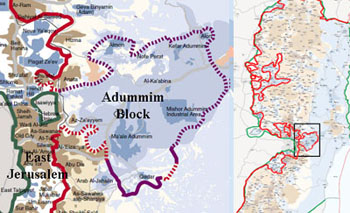
Should it be realized in the future, the planned route in this area will create an Israeli enclave deep within the West Bank, with the Separation Barrier surrounding the settlements of Ma’ale Adumim, Kfar Adumim, and Kedar, along with the Mishor Adumim industrial area. This would effectively cut the West Bank in two, as the enclave would prevent Palestinians from moving directly between the northern and southern West Bank and into East Jerusalem. This splitting of the West Bank would also deny Palestinians their right to self-determination in the form of a viable Palestinian state, as any solution that would enable smooth passage between the northern and southern West Bank would oblige Israel to pave a bypass around the Adumim Bloc. This road would have to run through difficult topography in the Jordan Valley – an area that is currently also under Israeli control – considerably lengthening travel time.

Construction of the barrier along the planned route, if carried out, will especially harm the residents of Abu Dis and a-Sawahrah a-Sharqiya by blocking the possibility of developing these communities’ land reserves and preventing access to the residents’ farmland. In effect, the barrier would annex their land to areas controlled by Israel.

Map of the planned route in the Ma'ale Adumim area

In 2006, the Abu Dis municipal council and the a-Sawahrah a-Sharqiya village council petitioned the Israeli High Court of Justice against building the barrier along the planned route. Following the petitions, the state amended the route, diverting it to a northwesterly direction, but the change did not significantly diminish the harm to the residents.

The notice of the construction freeze came after sections of the Separation Barrier had been built in this area, between al-‘Eizariyah and the Ma’ale Adumim settlement. Following the State Attorney's Office’s announcement, the High Court decided to suspend the hearing on the petitions. It should be noted that Israel did not cancel the land-requisition orders for the Separation Barrier along this route.

The prolonged freezing of construction work on the Separation Barrier along this route, as on other planned enclaves created deep inside the West Bank – Ariel, Kedumim, and Karne Shomeron – reinforce the contention that the route of the Separation Barrier in these areas was not based on real, urgent security needs, but on an intention to unilaterally establish facts on the ground that are liable to impede any future arrangement between Israel and the Palestinians.


B'TSELEM - The Israeli Information Center for Human Rights in the Occupied Territories


Testimony: Soldiers brutally beat Muhammad Id'is near a-Tuwani Village and Shani Checkpoint, Sept. 2009

Muhammad Id'is, Driver
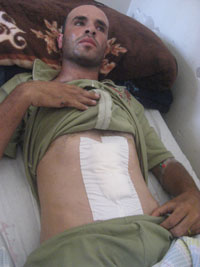
Muhammad Id’is after surgery in Aliyah Hospital, Hebron. Photo: Musa Abu Hashhash, B'Tselem. I live in Beit ‘Amra, which is next to Yatta. For many years, I have been transporting workers from the communities near Yatta and a-Samu' to Khirbet Jinba, from which they go to their work sites in Israel. Some of the laborers have permits and some don't. Over the past year, there has been a lot of this work. Every Sunday morning, I drive five laborers in my vehicle, a Mazda. Each of them pays me 70-80 shekels. When I transport laborers who don't have a permit [to enter Israel], they sneak in through the fence and then Beduin drivers from the Beersheva area take them to where they work in Israel.

Yesterday [6 September], around 4:30 A.M., I collected five laborers from a-Samu', one of them a boy fifteen years old. He was the only one of the five who did not have a permit. I drove along the bypass road that runs east of a-Samu' and from there to a-Tuwani.

We decided to say morning prayers at the Tuwani Mosque, and I parked the car next to the mosque. Following prayers, I went back to the car and got in. Two of the laborers also got in and the other three were on their way to the car. Suddenly, an army Hammer jeep pulled up. It came from the bypass road and entered the village. Four soldiers got out, one of them an officer. The officer appeared very agitated. He came over to my car, opened my door and forcibly pulled me out by the neck. I fell to the ground. He grabbed my right arm, stepped on my neck and cuffed my hands behind my back. At first, he didn't speak to me. He asked another soldier to pick me up. The officer told me to give him my identity card. I told him it was in my pocket. He took it out and kept it.

The soldier grabbed my arms from behind with force. He put his knee against my back. The officer said to me: “I killed four Gazans and you'll be the fifth.”

Before I answered or said anything, he gave me three hard, quick blows to the stomach with his rifle. I cried out in pain and felt I was losing my balance. The soldier kneed me in the back from behind. I fell to the ground, face down. I don't remember what happened after that. I think I was unconscious for about fifteen minutes, until somebody threw water on my face. When I awoke, I saw the officer checking the identity cards of the laborers, who were two or three meters from me. I saw the officer slap them all hard. He gave them back their identity cards and told them to get out of there.

Then the officer cut the handcuffs and told me to get into my car. He told me to follow the jeep to the checkpoint. I got into the car and sat behind the steering wheel. I was exhausted and my stomach hurt a lot. The officer got into the passenger's seat next to me, and another soldier sat in the back. The officer put the barrel of his rifle to my head and told me to start driving.

I drove about 100-150 meters. Before we even left the village, I felt I was about to lose consciousness again. I told the officer that I couldn't drive any further. He pulled up the hand brake and the car stopped. He yanked me to the seat next to the driver's seat, moved into the driver's seat, and began to drive. I don't remember what happened then. I only know that we were approaching the Shani (“Congo”) checkpoint. I woke up after somebody threw water onto my face again. I was at the checkpoint. The officer stopped the car. A Hammer jeep was parked in front of us. It was around 7:30 or 8:00.

The officer got out and opened the door next to where I was sitting. He got back into the driver's seat and kicked me hard, out of the car. I fell to the ground. The officer called to two soldiers in the Hammer to take me to a place where there was gravel, a few meters from the car. The two soldiers helped me get there. I wasn't able to walk and fell to the ground. The two soldiers kicked me in the stomach and back. I cried out and said to one of them: “Bastard, why are you beating me?”

The soldiers got real upset. They continued to kick me in the back and stomach for about ten minutes. I shouted loudly and asked them to stop. While I was lying there on the ground, the officer and the first soldier took pictures of me on their mobile phones.

I saw a female soldier run toward me from inside the checkpoint. I heard her tell the two soldiers that she was in charge of the checkpoint and that they should stop beating me. The officer, who was standing next to the two soldiers, told her not to interfere, and that it was his responsibility. She suggested calling an ambulance to check me and treat me, but the officer said he would do it himself, and again told her not to interfere.

The two soldiers stopped kicking me after the female soldier intervened. I was lying on the ground, crying out in pain and asking for first-aid. The officer ignored me.
At some point in time, I heard the officer tell the soldiers that a police van had arrived. I saw a van approach the checkpoint from the east. The officer told the soldiers to move me so that the police wouldn't cause them any problems.

Two soldiers grabbed my legs and the officer and another soldier grabbed my shoulders and they took me into the army tower inside the checkpoint. My head was outside the tower and I was still shouting. The two soldiers who had beaten me previously kicked me and told me to shut up.

The police van stopped very close to me. A policeman and policewoman got out. The policeman asked me what happened and I told him that the soldiers had brutally beaten me. I begged him to help me, for the sake of his children. He had compassion for me and promised to help me. He told me to wait five minutes. I waited more than half an hour, and then a Red Crescent ambulance crew arrived. Two members of the crew came into the tower. I heard them ask the officer who was standing in front of the tower to help them take me to the ambulance. The officer refused, saying the matter didn't interest him. The two paramedics brought a stretcher, put me on it, and took me to the ambulance.

Just then, I saw my father, my brother Usama, my uncle Abu Faisal, and my cousin running toward the ambulance. My father said to me, “Muhammad, Muhammad,” but I couldn't answer. My uncle, who is sixty years old, got into the ambulance, and we drove fast to Aliyah Government Hospital, in Hebron. I felt like my stomach was about to burst, and I had sharp pains. At the hospital, the doctors said they would open my abdomen to make sure I had no internal bleeding or injury to internal organs, especially my spleen. At first, I didn't agree, until my father arrived and signed the consent forms for surgery. When I woke up after the operation, my father, my uncles, and other relatives were around me.

My father told me that he and Usama had asked an officer at the checkpoint why the soldiers had done this to me. The officer told him that he was in charge of the checkpoint and that he didn't assault me; that it was the soldiers in the Hammer who did it. My father said another officer arrived in an army jeep and that my father turned to him in Hebrew, and the officer replied in good Arabic: “You should thank Allah that your son is alive. Take him and take care of him. He could have died or ended up in jail.”

I'm still hospitalized. I have a feeling of fatigue and have stomach pains. The X-rays, tests, and operation indicated that I had damage to my intestines and other internal organs. The doctors told me to rest for a few days in the hospital, during which they'll monitor my condition before releasing me.

Muhammad Mahmud Id'is Id'is, 27, married with two children, is a driver and a resident of Beit 'Amra in Hebron District. His testimony was given to Musa Abu Hashhash at Aliyah Hospital, in Hebron, on 7 September 2009.

Prison sentence for border policeman


B'TSELEM - The Israeli Information Center for Human Rights in the Occupied Territories


Sept.24 '09: Prison sentence for border policeman who assaulted Palestinians in Baka a-Sharqiya

In March 2005, B'Tselem took testimonies from three garage owners in the Baka a-Sharqiya industrial area who contended they had been assaulted by border policemen. In the first case, which occurred on 26 February 2005, border policemen assaulted Muhammad Markeb; the second, on 3 March 2005, involved the assault of Wael ‘Awad Allah; in the third case, which occurred on 5 March 2005, the victim was Jamal Hamamrah, who also testified that money was stolen from his ID holder. In each of the incidents, policemen severely beat the victims, who required medical treatment.

On 21 March 2005, B'Tselem requested the Department for the Investigation of Police to investigate these incidents and the possibility that similar incidents had occurred in the same area. The DIP opened investigations into the three incidents, and in December 2005, informed B'Tselem that the investigation file regarding Markeb had been closed because the department had been unable to locate the person suspected of committing the offense. In the other two cases, the Haifa District Attorney's Office filed indictments against three border policemen for assault and making threats. Jamal Hamamrah's claim regarding theft was not included in the indictment filed in his case.

Three years later, on 26 January 2009, one of the policemen, Shai Shalav, was convicted in the Magistrate's Court in Hadera on counts of assault and making threats. On 7 September 2009, he was sentenced to eight months' imprisonment, a conditional sentence of twelve months, a fine of NIS 6,000, and compensatory payments to 'Awad Allah (NIS 3,000) and to Hamamrah (NIS 6,000). On 8 September, the Haifa District Attorney's Office informed B'Tselem of the sentences.

In sentencing the defendant, Judge Sabri Muhsein, vice-president of the Hadera Magistrate's Court, said: "There is no dispute that the complainants in the two files were assaulted and beaten for no wrongdoing on their part, and there is no dispute that the conduct of the defendant was shameful and constituted a misuse of force by the police. Furthermore, the defendant's violence directed particularly at the complainant in Crim File 1791/07 [Jamal Hamamrah] was brutal, degrading, and painful, its objective being to humiliate and demean the complainant."