۱۳۸۸ بهمن ۱۰, شنبه

فریبی تاریخی‌ به “نام “سهام عدالت

امضا محفوظ

در برخورد با مردم فرودست جامعه در شهر‌ها و دهات کاملا روشن است که شاید مهم‌ترین وجه محبوبیت احمدی‌نژاد در میان این مردم در جریان انتخابات وگذاری "سهام عدالت" و بالا بردن ناگهانی مستمری بازنشستگان و سایر حقوق بگیران از دولت درست در حوالی انتخابات بوده است.

از هر کس که به احمدی‌نژاد در انتخابات رای داده بپرسی‌ چرا به ایشان رای دادی اول به "سهام عدالت" و بعد به بالا بردن ناگهانی مستمری‌ها اشاره می‌کند! و وقتی‌ می‌پرسی‌ غیر از این ایشان برای شما چه کرده، پاسخ بدون تفاوت یکی‌ است: هیچی‌

اما این "سهام عدالت" چی‌ است؟ از هر که بپرسی‌ که این چی‌ است بدون استثنا پاسخ این است: " نمیدانم.

در واقع عملا تمام بازنشتگان و تمام کسانی که درآمد زیر سقف خاصی‌ دارند، "سهام عدالت" واگذار شده و تنها اقلیت ناچیزی از آنها "سود" این "سهام" را به شکل نقدی آنهم قبل از انتخابات دریافت کرده اند و اکثریت مطلق در انتظار دریافت آن باقی‌ مانده اند و اکنون بعد از ۷ ماه از انتخابات هیچ کس نمیداند چگونه، کی و چقدر دریافت خواهد کرد و هیچ ارگان دولتی هم به مردم "سهام دار" پاسخگو نیست! به همین سادگی‌!

اما این تمام داستان نیست! ظاهرا "سهام عدالت" از محل "واگذاری" موسسات دولتی به "مردم" تامین میشود ولی‌ هیچ کس نمیداند این "سهام" از محل فروش کدام موسسات و بر چه مبنایی استوار است؟ بودجه پول اعطا شده به آن اقلیتی که قبل از انتخابات به "سود" سهام خود رسیدند از کجا و کدام ردیف بودجه تامین شده؟

در واقع این طرح در آبان سال ۱۳۸۵ و جزو اولین اقدامات استراتژیک دولت نهم نه در مجلس بلکه در هییًت وزیران به تصویب رسید و البته "اجرای" آن دقیقا در حوالی انتخابات آغاز شد.

کلیات طرح در سایت زیر اعلام شده:

http://vase.ir/index.aspx?siteid=81&pageid=372

و آئین نامه اجرائی آن را در این سایت میتوان یافت

http://vase.ir/index.aspx?siteid=81&siteid=81&pageid=396

اجرای این طرح به چندین ستاد (مرکزی، و ستاد‌های استانی زیر نظر استاندار) واگذار شده و در تعیین واجدین شرایط عملا خیلی ساده هیچ معیار روشن تعریف نشده است: طبق ماده ۴ آئین نامه اجرائی، مشمولین شامل افرادی میشوند که

از نظر طبقه بندي درآمدي جزو دو دهك پايين درآمدي محسوب مي شوند و بنا بر تشخيص ستاد مركزي واجد اولويت دريافت سهام عدالت هستند

در واقع تشخیص ستاد مرکزی مبنای وگذاری است و در اجرای طرح در آستانه انتخابات هیچ چوب خط روشن جز "تشخیص" ملاحظات محلی و سیاسی ملحوظ نبوده و این دست "ستاد مرکزی" را در وگذاری بر مبنای ملاحظات انتخاباتی در این یا آان منطقه "انتخاباتی" کاملا باز گذاشته. عدم نظارت مجلس و بی‌ توجهی‌ کاندیدا‌های رقیب دولت در کنترل منابع مال پول‌های پرداخت شده شگفت انگیز است.

نگاهی‌ به ابهامات عمدی کلّ طرح، شتاب در اجرای آن، دور زدن مجلس در چنین طرح بسیار حساس که عملا از طرح هدفمند کردن یارانه‌ها ابعاد بزرگ تری دارد (خصوصی سازی بخش ورم کرده دولتی که در ایران جنبه دوران ساز دارد)، و شکل خودسرانه اجرای آن این شک را شدیدا تقویت می‌کند که دولت نهم با زیرکی از سیاست کلی‌ نظام مبنی بر کاهش حجم دولت، با چنین طرح مبهمی چگونه برای خود رای انتخاباتی تضمین شده‌ای فراهم کرده. این شک بیشتر تقویت میشود وقتی‌ میبینیم که بدون فروش جدی هیچ موسسه دولتی، میلیارد‌ها تومان از منابع مبهم و ناروشن برداشت شده و به جیب اقلیتی از مردم در نقاط ویژه پرداخت شده و اکثریت "مشمولان" را در انتظار دریافت سهم خود به یک کارزار انتخاباتی کشانده

نکته شک برانگیز دیگر این است که در مناطق غیر کلان شهر‌ها وگذاری این سهام (و به ویژه اعطای پول سهام) چشمگیر تر بوده و این هوشیاری بانیان طرح را نشان میدهد چون فریب دادن مردم کلان شهر‌ها با دادن چنین محرک‌هایی‌ مشکل تر از مردم فرودست مناطق مهجور تر است.

به همین علت، بانیان طرح "انتخاباتی" برای "جذب" مردم کلان شهر‌ها از حربه افزایش مستمری بازنشستگان و مستمری بگیران دولت استفاده کردند بدون پروای اینکه بعد از انتخابات خیلی‌ ساده بخش اصلی‌ این افزایش را پس گرفتند و در این غوغای سیاسی بعد از انتخابات به دلیل ضعف جنبش سبز در افشا گری این رفتار‌های غیر قانونی، آب از آب هم تکان نخورده...

شاید افشای فریب تاریخی طرح "سهام عدالت" و افشای طرح افزایش خودسرانه مستمری حقوق بگیران مهم‌ترین وظیفه جنبش سبز باشد، وظیفه‌ای که در اثر تلاش این جنبش برای اثبات تقلب فیزیکی‌ در انتخابات و سرکوب‌های بیرحمانه رهبرانش کاملا مسکوت مانده

اینجا جنبش سبز به مردمی که مظلومانه با رای به احمدی‌نژاد فریب چنین طرح‌های مشکوک را خوردند بدهکار است و کوتاهی‌ در افشای این فریب نشانه جدا بودن این جنبش از مردم فرودست جامعه است.

در سو گ عزيزانمان؛ بس است اعدام


در سو گ عزيزانمان؛ بس است اعدام

نمي دانم بر كشته ات گريه كنم يا بر جواني ات ؟نمي دانم براي سرزمينم مويه كنم يا براي فرزندان اين خاك ؟

براي تويي كه دستور اعدام مي دهي،‌ تويي كه مي كشي ، تويي كه اعدام مي كني ... بگذار برايت بگويم اعدام يعني چه ؟

اعدام يعني بيست و نه سال زندگي با كشته ي پدر ، اعدام يعني بيست و نه سال شاهد زجر مادر بودن ،‌ اعدام يعني جستجوي بوي پدر ،‌يعني دلتنگ آغوش پدر بودن ،‌ اعدام يعني كنكاش خاطرات كودكي كه ديگر حتي به يادت هم نمي آيند ،‌ اعدام يعني تلفني به كودكي نه ساله براي تحويل كشته ي پدر .

اعدام يعني رفتن به سر مزاري كه هر بار كينه و سنگدلي همدستانت سنگ مزار عزيزانمان را شكانده اي ،‌ اعدام يعني بيست و نه سال شك ،‌ بيست و نه سال ترديد و بيست و نه سال در خود شكستن ، يعني ‌هق هق فرو خفته ، اعدام يعني سرنوشت هايي را عوض كردن ،‌ اعدام يعني غروب هاي غم بار بهشت زهرا ،‌ اعدام يعني قبر هاي بي نام و نشان و سنگ هاي شكسته بر مزار كه رديف به رديف كنار هم آرميده اند ،‌ اعدام يعني هر بار خواندن تاريخ تولد و تاريخ غروب از لابلاي سنگ هاي شكسته و هر بار شمردن سال هاي زندگي جواناني كه ديگر نيستند ،

اعدام يعني حسي فراتر از غم كه در واژه نمي گنجد ،‌ اعدام يعني خوني رنگين بر سنگفرش ،‌جواني به پايان رسيده در گوشه اي از وطن ، اعدام يعني گرفتن جاني كه خدا وند بخشيده .

تويي كه حكم بر اعدام مي دهي .... به من بگو شب چگونه سر به بالين مي گذاري وقتي مادري ،‌پدري ، فرزندي ... انساني شب را بر عزيزش مويه مي كند ،‌ از غم عزيزي ضجه مي زند. چگونه شب را به روز و روز را به شب مي رساني ، فقط لحظه اي به خود آي به وطن بينديش ،‌به سرزمينت ، به هم وطنت ، آن جوان مي توانست فرزند تو ،‌برادر تو ،‌خواهر تو ،‌ و يا عزيز تو باشد.

با خدا رقابت مي كني ؟ لختي بينديش كه تو هم ايراني هستي ،‌زاده ي اين خاك و بوم ،‌ايراني ،‌از ايران ،‌فرزند اين ديار .

اين همه خون ،‌اين همه تلخي ،‌اين همه سياهي ، اين همه آتش ،‌اين همه فغان بس نيست ؟‌

با اشك مادران اين ديار چه مي كني ؟‌با قامت خميده ي پدران وطن ؟ با آخرين نگاه او چه مي كني ؟

با سپيده ي صبح چه مي كني ؟‌با جوانه هاي سبز چه مي كني ؟

و من در سپيده ي صبح و رويش جوانه هاي سبز حرف ها با تو خواهم داشت ....

بس است اعدام ،‌بس است .

آ-ر

8/11/1388

سومين جلسه محاکمه تعدادي از متهمان آشوب هاي روز عاشورا آغاز شد، ايرنا

سومين جلسه محاکمه 16 نفر از متهمان آشوب هاي روز عاشوراي تهران صبح امروز-شنبه – به رياست قاضي صلواتي رييس شعبه 15 دادگاه انقلاب اسلامي تهران در محل مجتمع قضايي امام خميني (ره) آغاز شد.

به گزارش روز شنبه خبرنگاران گروه اجتماعي ايرنا، در اين جلسه به اتهامات 14 مرد و دو متهم زن رسيدگي مي شود.

براساس اعلام دادسراي عمومي وانقلاب تهران :اتهامات متهمان اين پرونده ها که همگي آنان در زمان حاضر در بازداشت بسر مي برند ، در 5 مورد محاربه و افساد في الارض و در ساير موارد اجتماع و تباني عليه امنيت ، تبليغ عليه نظام و قصد بر هم زدن امنيت کشور از طريق تحريک افراد به شورش و آشوب است .
پايگاه اطلاع رساني دادسراي عمومي و انقلاب تهران نيز امروز گزارش داد: کيفرخواست اين متهمان با استناد به گزارش مامورين ، اقرارهاي صريح متهمان و تحقيقات تکميلي در مورد متهمان ياد شده و سوابق آنان صادر شده است.

نماينده مدعي العموم در ابتداي اين جلسه در مقدمه کيفرخواست هاي دادستان عمومي و انقلاب تهران در خصوص متهمان ياد شده گفت :پيروزي انقلاب اسلامي به­ عنوان يک حرکت و رسالت الهي ، پايان بخش سلطه ي نظام استعماري غرب در جمهوري اسلامي ايران و طليعه حيات سياسي ملتي آزاده و سرفراز، سرآغاز دشمني­ها و اقدامات خصمانه­اي بود که با هدف براندازي نظام مقدس جمهوري اسلامي دنبال مي­شد.

“دشمنان قسم خورده که طي 30 سال عمر با برکت جمهوري اسلامي از اقدامات براندازانه خود ازطريق عمليات تروريستي، درگيريهاي مسلحانه خياباني، جنگ تحميلي و تحريم­هاي گسترده در همه زمينه ها طرفي نبسته بودند، به زعم خود انتخابات دهم رياست جمهوري و فضاي غبار آلود ناشي از انحرافات فاحش برخي احزاب و سياسيون و همچنين زمينه ترديد به وجود آمده از سکوت برخي خواص و افراد عافيت طلب را فرصتي براي پيگيري اهداف سوء خود عليه مردم و جمهوري اسلامي ايران تلقي کردند.”

نماينده مدعي العموم افزود: آنها با بکارگيري تمامي ظرفيت ها و امکانات خود ازجمله بسيج رسانه­ها و شبکه هاي ماهواره­اي از طريق تلاش براي تداوم فضاي ترديد و نااميدي در کشور ، اهداف خود را در قالب تئوري ها و چهارچوب هاي جنگ نرم دنبال کردند.

وي افزود:براي مثال “موسسه بروکينگز” بعنوان يکي از موسسات پژوهشي وابسته به دستگاههاي اطلاعاتي آمريکا چند ماه قبل از انتخابات دهم رياست جمهوري گزارشي با عنوان «راهکارهاي آمريکا درقبال انتخابات دهم رياست جمهوري» دراختيار دستگاه­هاي اطلاعاتي- امنيتي اين کشور قرار مي­دهد.

“در اين گزارش «طرح براندازي نرم» به­عنوان بهترين و مناسب ترين راهکار آمريکا براي تغيير نظام جمهوري اسلامي ايران اعلام شده است که اين مسير کمترين هزينه­ها را به دنبال دارد. “

نماينده مدعي العموم درکيفرخواست خود تصريح کرد:هدف اصلي اين طرح براندازي نظام اسلامي ايران و ايجاد حکومتي است که بيشترين همراهي را با منافع آمريکا داشته باشد.

به گفته وي در اين طرح مهم­ترين مشکلات آمريکا در راستاي براندازي نرم عبارتند از:

1 – نظام اسلامي ايران به علت پشتوانه­هاي قوي مردمي و پشت سر گذاشتن همه بحرانها از جمله جنگ، انزواي بين­المللي، بي­ثباتي و حملات تروريستي ، همچنان بسيار مستحکم است.

2 – حمايت آمريکا از جريانات برانداز داخلي، موجبات نفرت بيشتر مردم ايران از آمريکا را فراهم مي­سازد.

3 – جمهوري اسلامي به لحاظ مباني ديني و مشروعيت مردمي قادر است که طرح ها و اقدامات براندازانه داخلي و خارجي را به خوبي خنثي کند.
در همين رابطه سازماندهي آشوب ها و اغتشاشات و بهره برداري از آنها خصوصا در روز عاشورا از جمله طرح ها و اقداماتي بود که در دستور کار دشمنان انقلاب قرار گرفت که در اين راستا حضور طيف هاي مختلف از جمله جريانات سکولار، گروهک­هاي ضد انقلاب ، سلطنت­طلب ها، منافقين و فرقه ضاله بهائيت و عده اي فريب خورده در روز عاشورا از نکات بارزي است که اهداف آشکار و پنهان دشمنان و گروهک­هاي ضد انقلابي براي ضربه زدن به نظام را نشان مي­دهد.

نماينده مدعي العمومي گفت : بنابراين جاي تعجب نيست نخست وزير رژيم اشغالگر قدس پس از اغتشاشات روز عاشورا، ضمن تحسين اقدام اغتشاشگران ، بر لزوم بکارگيري بيشتر آمريکا از فضاي مجازي براي براندازي ج.ا.ا سخن گفته و به اين ترتيب نقش بيگانگان بويژه آمريکا و رژيم صهيونيستي را در اغتشاشات برملا کرد.

وي افزود:از همين رو دشمنان انقلاب اسلامي که قبل و پس از انتخابات تمامي امکانات و توانايي هاي خود را براي ايجاد تزلزل در اسلاميت و اصل ولايت فقيه بسيج کرده بودند، تلاش کردند ضربه اساسي را به زعم خود در روز عاشورا بر نظام وارد سازند که با حضور به موقع ملت بزرگوار ايران، اين توطئه خنثي گرديد.

“نگاهي به واکنش هاي دشمنان انقلاب اسلامي پس از اغتشاشات روز عاشورا نشان مي دهد که آنها در صدد بودند از طرق ذيل به اهداف شوم خود برسند که به فضل الهي در اين زمينه ناکام ماندند.”

نماينده دادستان عمومي وانقلاب تهران تصريح کرد: اين اهداف عبارت بودند از :

-حمايت از ساختار شکني در روز عاشورا توسط آمريکا ، رژيم صهيونيستي ، کشورهاي اروپايي، سازمانها و نهادهاي وابسته به آنها.

-القاي ناتواني نظام در برخورد با اقدامات براندازانه اغتشاشگران.

-افزايش مخالفت­ها و القاي سقوط نظام پس از عاشورا.

-تشديد اقدامات ساختارشکنانه عليه نظام اسلامي.

-تحريک مردم به حضور در آشوب ها و اغتشاشات.

به گفته وي ” دشمنان براي رسيدن به اهداف ياد شده تلاش کردند با حضور منافقين، سلطنت­طلب­ها و ساير گروهک ها به صورت سازمان يافته و افراد فريب خورده و ناآگاه در آشوب ها و اغتشاشات روز عاشورا ، به مقدسات اسلامي تعرض نمايند. “

نماينده مدعي العموم دردادگاه تصريح کرد:”بعلاوه تعداد قابل توجهي از گروه هاي منحرف که از طريق سيستم مجازي با يکديگر ارتباطات محفلي داشتند ، به همراه عناصر فرقه ضاله بهائيت که براي فتنه انگيزي در روز عاشورا مستقيماً به سران فرقه در اسرائيل وصل و توسط آنها هدايت مي­شدند ، در دسته جات 3 الي 4 نفره ، قبل از اغتشاشات روز عاشورا با استقرار در مکانهاي خاص و تهيه پلاکاردها و بنرهاي اهانت­آميز عليه نظام و مقدسات اسلامي، در صدد بودند تا به خيال باطل خود کار نظام اسلامي را در اين روز يکسره نمايند.”

“از همين رو درحالي که عزاداران حسيني در روز عاشورا در تکيه­ها و مساجد مشغول سوگواري بودند، عوامل گروهک هاي منافقين ، سلطنت طلب ها ، فرقه ضاله بهائيت و ساير گروهک هاي ضد انقلابي و غيرقانوني ، با هلهله و سوت و کف ، ضمن اهانت به مقدسات، ضرب و شتم ، هتک حرمت و توهين به عزاداران حسيني (ع) و مامورين انتظامي، با قصد مقابله با نظام ، مرتکب جرايم مهمي مانند محاربه و اجتماع و تباني عليه امنيت کشور شدند و حتي از انجام جرايم بر ضد عفت و اخلاق عمومي و احتراق ، تخريب و اتلاف اموال عمومي و خصوصي به قصد مقابله با نظام اسلامي دريغ نکردند. “

دراين کيفر خواست همچنين آمده است :”در اين زمينه علاوه بر عوامل ساير گروهک هاي ضد انقلابي ، منافقين دستگير شده در روز عاشورا نيز اعتراف کرده اند که براي ايجاد ناامني ، آشوب و اغتشاش ، تجمعات و تظاهرات غيرقانوني ، به بهانه انتخابات دهمين دوره رياست جمهوري و حوادث بعد از آن، به کرات در مقراين گروهک ملحد و محارب در عراق و ساير کشورهاي اروپايي آموزش ترور و آشوب ديده اند.”

“آنها همچنين در اقارير خود اعتراف کردند ضمن جاسوسي و جمع آوري اطلاعات ، در تمامي تجمعات ضد انقلابي ، آشوب ها و اغتشاشات حضور فعال داشته و براي اقداماتي از قبيل بمب گذاري ، ترور و انتساب آن به نظام ، نصب تراکتهاي تبليغاتي ، شعار نويسي ، تخريب و به آتش کشيدن اموال اشخاص حقيقي و حقوقي با هدف ايجاد نارضايتي در بين مردم و کسبه به صورت سازمان يافته ماموريت داشته اند و در همين رابطه فيلم هاي صحنه هاي درگيري، آشوب و اغتشاشاتي را که خود به وجود آورده بودند در اختيار عناصر و سرپل هاي نفاق در خارج از کشور و عوامل اطلاعاتي دشمن و شبکه هاي معاند خارجي قرار داده اند.”
نماينده مدعي العموم تصريح کرد :” با استناد به کيفرخواست هاي صادره که مستند به تحقيقات و بررسي هاي بعمل آمده ، گزارش مامورين ، اقارير متهمان و محتويات پرونده ها و ارتکاب اعمال مجرمانه متهمان در روز عاشورا است ، از رياست محترم دادگاه تقاضاي مجازات درباره آنان مي شود.”

اين گزارش حاکيست نماينده مدعي العموم در ادامه ، کيفرخواست هر يک از متهمان را که حاوي اتهامات آنان است ، بطور جداگانه قرائت خواهد کرد.

Jan. '09: 'Asira al-Qibliya: One year after settlers rioted in the village, only one settler has been indicted


27 Jan. '09: 'Asira al-Qibliya: One year after settlers rioted in the village, only one settler has been indicted

B'TSELEM - The Israeli Information Center for Human Rights in the Occupied Territories

On 13 September 2008, after a Palestinian stabbed a boy and torched a caravan in the Shalhevet Yam settlement near Yitzhar, dozens of settlers raided the village of ‘Asira al-Qibliya. They threw stones, fired into the air, broke windows, drew Stars of David on walls of homes, and caused extensive property damage. Testimonies given to B’Tselem indicate that soldiers present at the time enabled the settlers to riot and fired at residents of the village, in breach of their lawful duty to protect the villagers. Some of the events were documented on video as part of B'Tselem’s camera distribution project.


In October 2008, B'Tselem wrote to the Judge Advocate General’s Office and the Israel Police, demanding that the Military Police be directed to investigate the involvement of soldiers in the attack on the village and the firing at villagers, and that the Israel Police investigate the involvement of Yitzhar security officials in the attack. The only response B'Tselem received was a statement from the judge advocate for operational matters that the matter had been forwarded for examination.

The Yesh Din organization also wrote to the Israel Police, demanding an investigation into the settlers’ conduct. After being informed, on 19 January 2009, that the file had been closed on grounds of lack of evidence against the four persons against whom the complaints were filed, Yesh Din appealed the closing of the file to the head of the investigations office in the Samaria District on 3 December 2009. The file has not yet been received in the State Attorney's Office, and the allegations are being examined by the Samaria District police.

Today, more than one year and four months since the events, B'Tselem knows of only one indictment that has been filed relating to the events, charging a resident of Yitzhar with using a firearm in a residential area and with participating in a riot (it should be noted that the indictment includes a mistake in the name of the village). Yet dozens of settlers took part in the attack on the village, in the presence of soldiers and benefiting from their protection. The indictment itself indicates that the attack was carried out by “… the defendant and a number of other persons whose identity is unknown to the State.” Therefore, it is unclear why, more than a year after the events took place, the police have been able to identify only one of the rioters. The incident is especially grave in that security forces were present throughout the events.

Soldier fires rubber-coated metal bullet at head of ten-year-old boy in Ni’lin, Jan. '09


Testimony: Soldier fires rubber-

coated metal bullet at head of ten-year-old boy in Ni’lin, Jan. '09


On 1 January 2010, Mu’ataz al-Hawaja, a ten-year-old boy from Ni’lin, in Ramallah District, was struck in the head by a rubber-coated metal bullet that a soldier fired at him during a demonstration against the Separation Barrier that was taking place in the village.

Testimonies given to B'Tselem indicate that, during the demonstration, young people and children from the village clashed with soldiers and Border Police officers. A group of demonstrators gathered on a hill, and some of them threw stones at soldiers. At some point, the demonstrators noticed three soldiers coming toward them and ran away.

Mu’ataz al-Hawaja and another boy lagged behind their friends. According to the testimonies, one of the soldiers approached al-Hawaja and fired a rubber-coated metal bullet at him. The boy was wounded in the head and taken to a medical clinic in the village. He was later taken to the hospital in Ramallah.

In his testimony, al-Hawaja described the moment he was hit:

Mu’ataz al-Hawaja. Photo: Iyad Hadad, B'Tselem.
One of the soldiers came very close to me. I saw him too late and began to run away from him when he was only about 20 meters away. As I ran, I heard the soldier shout to me in Arabic: “Stop or I’ll shoot!” I kept on running, and then the soldier fired a few shots. I felt nauseous and fell down. I put my hand to the back of my head and when I looked at it, I saw it was bloody. I quickly got up and continued to run, crying as I ran. I heard Majd al-Hawaja, who is in my class, shouting to the others that I had been wounded and needed help.

Hilal Nafe’a, 38, who works as a guard in a tower belonging to a Palestinian cell-phone company in Ni’lin, witnessed the incident. In his testimony to B'Tselem, he related:

I saw the soldiers begin chasing the children, firing “rubber” bullets at them. The distance between the soldiers and the children wasn’t big – just a few meters. I saw a soldier aim his rifle and then fire a “rubber” bullet at one of the children. The child was hit and then fell. After he fell, the soldier started chasing another child.

To the best of B'Tselem’s knowledge, the Open-Fire Regulations relating to rubber-coated metal bullets state that the bullets may be used only after other means for dispersing demonstrations, such as tear gas and shock grenades, have been used and were ineffective. In addition, the minimal distance for firing the bullets is 40 meters. Even at that distance, it is forbidden to fire at children, and the bullets must be aimed only at the legs.

During the hearings of the State Commission of Inquiry into the Events of October 2000 (the Or Commission), it was explained, by manufacturers of the bullets among others, that 50 meters is the minimal distance at which the bullets may be safely fired. The Commission pointed out that, when fired at a distance in which the shot might be lethal – under 40 meters – the accuracy is diminished, and a shot aimed at the legs might strike the chest or even the head. The Commission concluded that the danger inherent in the use of this ammunition is unreasonable and, therefore, it should no longer be used as means for dispersing demonstrations in which no threat is posed to security forces.
B'Tselem’s investigation of the incident raises a suspicion that a solder fired a rubber-coated metal bullet from close range at the upper body of a ten-year-old child who was running away from him, striking the child’s head. In doing so, the soldier breached the army’s Open-Fire Regulations.

B'Tselem sent a demand to the Judge Advocate General’s Office that it immediately order the Military Police to investigate the circumstances of the incident.

26 Jan. '09: Human rights community to Israeli Prime Minister: Time is running out. Establish independent inquiry into Operation Cast Lead


26 Jan. '09: Human rights community to Israeli Prime Minister: Time is running out. Establish independent inquiry into Operation Cast Lead

Human rights organizations in Israel reissued their call to the Government of Israel to establish, without delay, an independent and impartial investigation mechanism to thoroughly examine the allegations raised regarding violations of international law during Operation Cast Lead. In a letter addressed to the Prime Minister and members of his cabinet, heads of the organizations today (Tuesday, 26.1.10) called on Israel to take advantage of the short time still remaining before the UN deliberated on the Goldstone report’s implementation.

The organizations specify in their letter why the military's internal examination, which includes operational debriefings and approximately 30 Military Police investigations, does not satisfy Israel's obligations to investigate. These examinations do not conform to the demands set by the Goldstone fact-finding mission, that Israel and Hamas each investigate suspected violations of international law during Cast Lead. Therefore, they will not be accepted as an appropriate response to the Goldstone report. Furthermore, the organizations warn that Israel’s refusal to hold an independent investigation will expose military officers and members of the previous government to investigation and legal proceedings likely to take place outside Israel.

In light of the above, the organizations called on the Prime Minister to establish, without further delay, an impartial investigative body which will conduct an independent and effective investigation of incidents in which allegations have been raised that Israel violated the provisions of international law during Operation Cast Lead. In order that the investigation will be seen as credible, the organizations believe that a foreign expert on international humanitarian law should be a part of this process. The investigation should examine Israel’s conduct during Operation Cast Lead, including an examination of accountability on the political and command level. Likewise, the investigative body should be charged with preparing the legal groundwork for future military conduct.

This morning the Israeli media reported that the PM is considering appointing a legal team to review the military's investigations and debriefings. The organizations clarify that only an independent and transparent investigation will satisfy Israel's international obligations.

The extent of damage to the civilian population during the operation was unprecedented. The allegations raised regarding the military’s conduct are serious and grave. The Israeli public has the right to an explanation of the actions taken in its name in the Gaza Strip. This is an essential issue at the heart of Israeli society.

Adalah - The Legal Center for Arab Minority Rights in Israel, Association for Civil Rights in Israel, B'Tselem - The Israeli Information Center for Human Rights in the Occupied Territories, Gisha - Legal Center for Freedom of Movement, Hamoked - Center for Defence of the Individual, Physicians for Human Rights - Israel , Public Committee Against Torture in Israel, Yesh Din - Volunteers for Human Rights , Rabbis for Human Rights

B'Tselem investigation raises grave suspicion that the killing of the three Palestinians in Nablus on 26 December 2009 was unlawful


27 Jan. '09: B'Tselem investigation raises grave suspicion that the killing of the three Palestinians in Nablus on 26 December 2009 was unlawful

In the pre-dawn hours of 26 December 2009, soldiers shot to death Ghassan Abu Sharakh, Nader a-Sarkaji, and ‘Anan Subuh, while each of them was at home in the Old City of Nablus. The first two were with their families at the time they were shot. State officials, among them the IDF Spokesperson, stated that the three had been involved in the shooting attack that killed Rabbi Meir Chai on 24 December 2009. They further stated that the soldiers went to the houses to arrest them, but the three refused to surrender, and the soldiers shot them when they felt their lives were in danger.

B'Tselem’s investigation of the event, which included interviews with nine relatives of the men who were killed and examination of the findings at the scene and of medical reports, revealed a different version. The investigation raises a grave suspicion that the soldiers acted unlawfully and, at least in the cases of Ghassan Abu Sharakh and Nader a-Sarkaji, made no attempt to arrest them before shooting them to death.

The findings of the investigation follow.

  • About 2:30 A.M., soldiers surrounded the house of Abu Sharakh and bombed the front door of the building. The soldiers called to all residents of the building to go outside. Jihad Abu Sharakh, a brother of Ghassan Abu Sharkh, left his apartment on the third floor of the building, and soldiers ordered him to go into the yard. After he did that, soldiers beat him and cuffed his hands. In the meantime, other members of the family gathered on the second floor and began to go down the steps leading to the yard. Ghassan Abu Sharakh, who was unarmed, led the group, with his mother and sister-in-law walking behind him. According to eyewitnesses, at the moment he reached the last steps and stood facing the soldiers, they shot him and he fell and died on the spot.


  • Around 2:40 A.M., soldiers surrounded the house in which Nader a-Sarkaji lived. The soldiers opened massive gunfire at his apartment while he and his wife were sleeping, without first calling to them to go outside. Nader a-Sarkaji shouted to the soldiers that he was coming out of the apartment. After a break of about one minute in the firing, he went to the corridor leading to the yard of the house, his wife behind him. At the same moment, soldiers on the roof overlooking the yard of the house shot him in the head and he fell and died on the spot. His wife, who was standing behind him, was injured in the leg by fragments and also fell to the ground. After a few seconds, soldiers came into the yard and shot Nader a-Sarkaji again, several times.


  • Around 3:00 A.M., soldiers surrounded the house of the Subuh family, fired at the building, and called out on a loudspeaker to all the occupants to go outside. The occupants, except for ‘Anan Subuh, went downstairs and stood at the entrance to the building. Soldiers separated the women and children from the men. A soldier who introduced himself as “Officer ‘Ali” threatened the group of men, including ‘Anan Subuh’s elderly father, that he would destroy their house if they didn’t tell him where ‘Anan was located. The family refused to answer. Afterwards, the family heard a few blasts coming from the direction of their house. The same officer beat and threatened ‘Anan’s brother Jamal, ordering him to call to his brother in the loudspeaker and convince him to surrender. During the incident, the family heard gunshots coming from the direction of the house. Around 7:00 A.M., after the soldiers left the area, the Subuh family returned to their house and found ‘Anan’s body near the place where he had been hiding.

B'Tselem’s investigation indicates that, contrary to the contentions made by Israeli officials, it appears that no real attempt was made to arrest Ghassan Abu Sharakh and Nader a-Sarkaji, and they were not given any warning before they were shot to death. They were shot even though they were unarmed and had obeyed the instructions of the soldiers to leave their houses. According to B'Tselem’s investigation, the claim reported in the media that Ghassan Abu Sharakh attempted to escape is unclear, given that soldiers were positioned at the only exit from the building and they shot him while he was on the stairs, before he reached the yard in which they were positioned. In addition, the soldiers shot the two immediately, without establishing whether they posed a threat to their lives.

As there were no eyewitnesses to the killing of ‘Anan Subuh, B'Tselem cannot state with certainty the circumstances in which he was shot by soldiers. However, B'Tselem’s investigation indicates that, although a weapon was found in his hiding place, ‘Anan Subuh did not fire at the soldiers. The IDF’s Spokesperson’s announcements regarding this incident did not mention an exchange of gunfire that night.

The three Fatah activists were suspected by Israel of committing a grave offense, and stood to serve long sentences had they been convicted. However, as they were merely suspects, the army’s duty was to arrest them and bring them to trial. Israel denies that it carries out assassinations in the West Bank, yet B’Tselem’s investigation raise a grave suspicion that the soldiers’ conduct was appropriate to an assassination mission, to an arrest operation.

In light of the above, B'Tselem wrote to the judge advocate general, Maj. Gen. Avichai Mandelblit, demanding that he immediately order a Military Police investigation into the circumstances of the killings of Ghassan Abu Sharakh, Nader a-Sarkaji, and ‘Anan Subuh. B'Tselem further demanded that the Military Police also investigate the soldiers’ violence and threats against the families of the three men and the damage caused to their property.

B'TSELEM - The Israeli Information Center for Human Rights in the Occupied Territories

Testimony: Young girl dies in Gaza after waiting two months for a permit to enter Israel for treatment

Amal Heji, 38

Amal Heji

My brother’s daughter, Fidaa Talal Salim Heji, began to suffer from health problems around March 2007, when she was fifteen. Among other things, she lost a lot of weight, about twenty kilos in a month and a half. She was hospitalized in a-Shifaa Hospital, in Gaza City, where they found that her hemoglobin level was very low. She was referred to Nasser Hospital in Egypt, and her mother and I went with her. The physicians there found that she had cancer in her lymph nodes. She received chemotherapy there from 18 April to 28 May 2007. Her condition improved and we returned to Gaza, but a month later, it deteriorated again. She was pale, had trouble walking, and suffered dizzy spells. She couldn’t go to high school. Every time these symptoms worsened, we took her to the hospital, where she’d remain for a week or ten days.

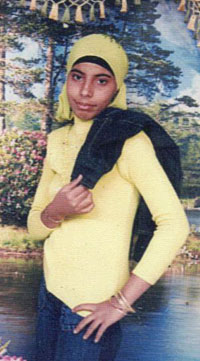
Fidaa Heji. Family photo.A year after we returned from Egypt, Fidaa began to receive chemotherapy treatments at a-Shifaa Hospital. Each time, they hospitalized her for twenty days. She was kept in isolation because her immune system was weak and it was important that she not catch other diseases or inhale germs. After each hospitalization, she went home. This continued until August 2009, when her condition deteriorated drastically. She was hospitalized in isolation and was given painkillers and antibiotics. Her weight dropped from one day to the next. The doctors referred her to Tel Hashomer Hospital (in Israel), where she could get better treatment and undergo a bone-marrow transplant. She was given an appointment there for 23 September 2009. On 10 September, I asked the Liaison Office to issue a permit for Fidaa and her mother to enter Israel, and I gave the officials all the necessary documents: the referral, confirmation of the appointment from Tel Hashomer, medical reports, and copies of their identity cards. More than a week afterwards, a Shabak [Israeli Security Agency] agent from Erez Crossing called to verify the details on the forms. After that conversation, I called the Liaison Office and I also went there. Rif’at Muheisen, the head, told me that the Israelis had not responded. We didn't think it would be a problem to get an entry permit because my niece was a young girl in a dangerous medical condition that required urgent attention. We waited, but the permit didn't come until the day of the appointment.

After that, I asked the Liaison Office to renew the request and make a new appointment with the hospital. Fidaa was given an appointment for 20 October, and on 29 September, I again submitted all the document s to the Liaison Office. Each time I spoke with Rif’at Muheisen, he said that the Israelis had not replied and had not completed the security check. Fidaa’s mother cried day and night. Fidaa looked terrible. Seeing her made us very sad. We continued to wait. The new time for the appointment passed too. We made another appointment, this time for 9 November. I submitted another request for an entry permit. We were tense and fearful and kept waiting. Each day, my niece’s condition got worse. Her weight dropped to about thirty kilos. She was connected to an inhalator and was hospitalized in isolation. She lived on antibiotics and painkillers.

On 11 November 2009, Fidaa died.

Four days later, on 15 November, an official from the Liaison Office called to tell me that the Israelis had approved Fidaa’s entry. We had hoped that Fidaa would be treated and get better. Maybe, if they had given her the permit in time, she would still be with us.

Amal Salim Muhammad Heji, 37, a resident of Gaza, is Fidaa Heji’s aunt. She was an officer in the President’s Guard in the Gaza Strip until the Hamas takeover. She gave her testimony to Muhammad Sabah at her home on 6 January 2010.

۱۳۸۸ بهمن ۹, جمعه

Gaza from above


By Teymoor Nabili in on January 29th, 2010
.

Richard Goldstone is unlikely to be worried by the savaging he received off a few students at America's Yale university, but the incident serves to show the extent to which the anit-Goldstone narrative has penetrated.

gazastarofdavid.jpg

This is an aerial photo of Gaza, where a 200 foot wide star of David was carved into farmland by Israeli tanks.

It's one of the images contained in the Goldstone Report.

Justice Goldstone himself spoke to students at Yale University this week, and though press coverage of the event is scant, Mondoweiss blog tells the story:

though he said he would not be talking about Gaza, his report came up again and again, and in fact the anti-Goldstoners tried to turn the event into a circus.

The hostility to his presence also made it into the pages of the Yale student newspaper .

The two student authors of the piece attack the report as "riddled with factual errors and twisted accounts of the war", but instead of providing any reasoned argument in support of their accusation, they paint the Judge as the biased puppet of the United Nations Human Rights Council, which, again without any supporting argument or evidence, they write off as:

"...a body that is used by some of the world’s worst human rights abusers to deflect attention from their own authoritarianism and brutality.

Now the distinguished and experienced Goldstone has been savaged by plenty of much more heavyweight critics, so the shallow attacks of a couple of students is unlikely to register on his consciousness; nonetheless the piece does tend to illustrate how the narrative and techniques of the anti-Goldstone crowd have been absorbed at many levels.

کلیپ "خشم کوچه" از تولیدات بروبچه های انقلابی است، یک لالایی نوین، لالایی نه برای خواباندن خروش مردم، بلکه نغمه ای سرودن برای بیدار نگه داشتن و نیرو ب